There has been a heat wave stretching across the southwest United States—from California through Arizona, and likely reaching into Texas. In places like,Palm Springs, Twentynine Palms, and Joshua Tree, temperatures have surged 10 plus degrees. March in Phoenix, AZ saw days reaching 103-107 degrees, well beyond what should be expected.
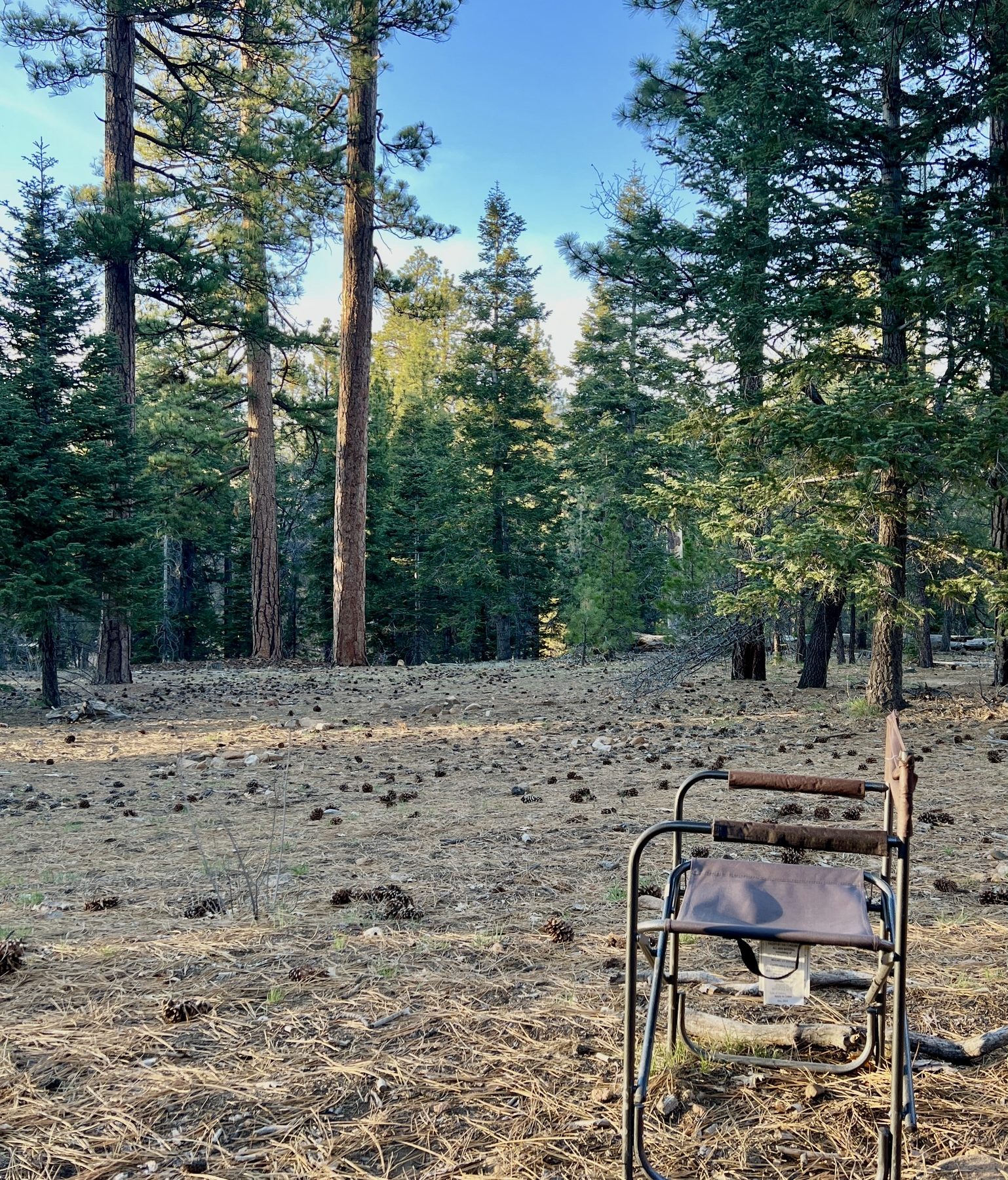
Here I sit in the San Bernardino National Forest.
Even here, the temperature is off.
At 6,800 feet, the air should be cooler—closer to 55 degrees. But today the high is 72 degrees. Warmer than it should be, even in this refuge.
While many are fleeing the desert floor, searching for relief, turning to cooling centers, I found one of the few remaining pockets where the temperature still holds some restraint.
But it is not enough.
There is not enough high ground, not enough cool air, not enough forest to absorb the movement of entire cities seeking refuge. If this becomes a pattern—if this becomes a way of life—then where do we go?
As I travel, I can’t help but ask:
Will there be more dryness?
Less rain?
More wildfires to consume the bastions that remain?
For now, this forest still breathes.
The grass is green.
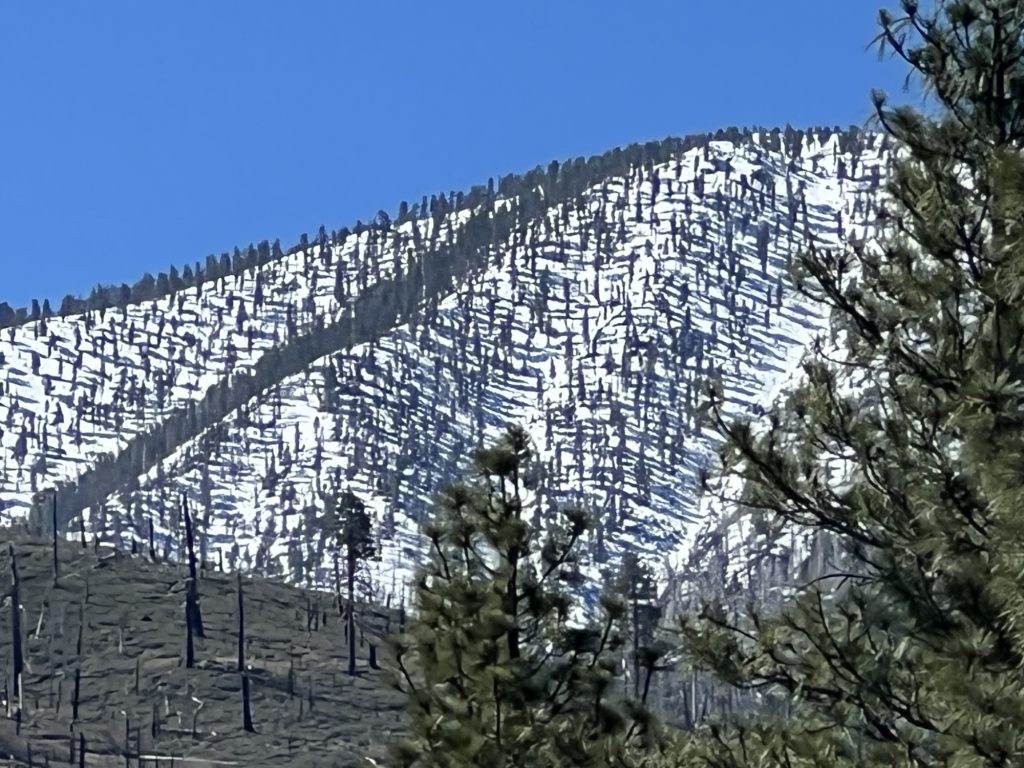
The pines—some scarred—are recovering from fire.
Lizards scurry across the ground.
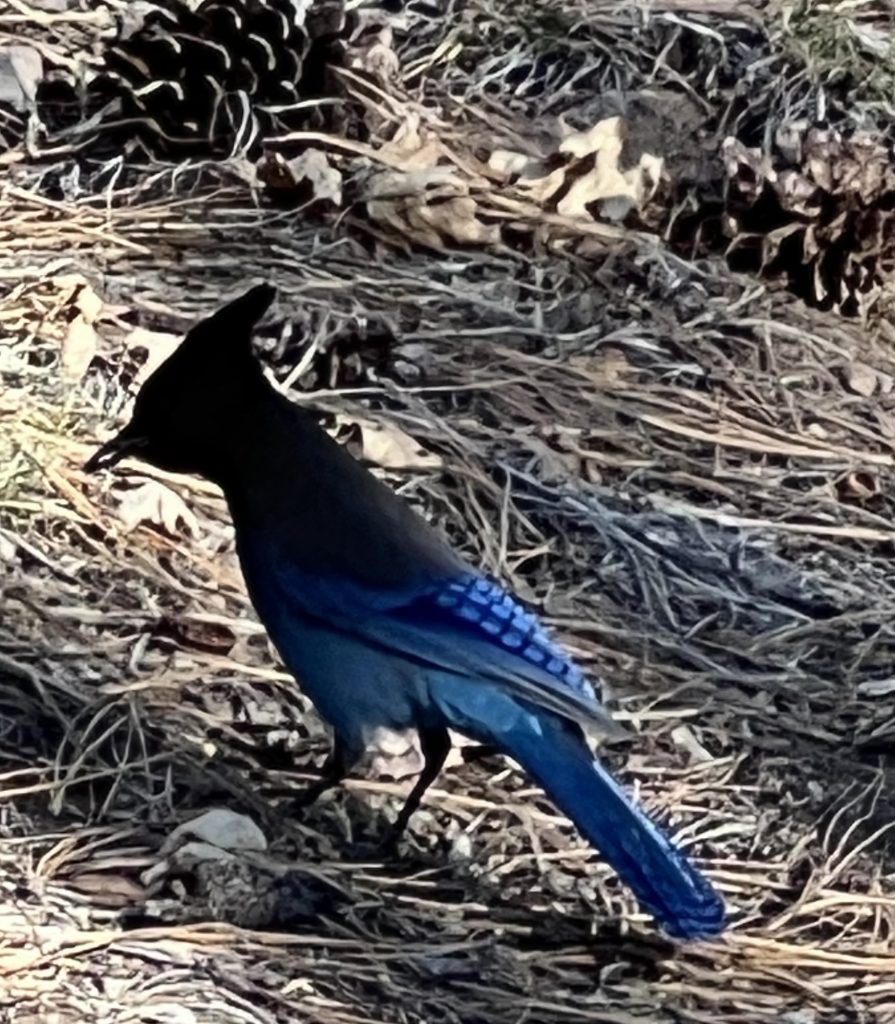
Stellar’s Jays sing.
Life feels peaceful.
There are signs everywhere of continuity… and of fragility.
The chipmunks should be out. They usually are—quick, alert, darting through the underbrush. But today, strangely, there are none.
And I notice that absence.
I sit here not just as an observer, but as someone who loves this—who loves the way things live when they are left to be what they are. The forest offers itself a home for creators small and large. It does not strive to become something else.It opens its boundaries to the living — even us. It grows, adapts, recovers, and continues in a rhythm older than we.
And I carry a desire—simple, but not easy:
That we would learn to live at peace with this.
Not to overtake it.
Not to dominate it.
Not to strip it for use and leave it diminished.
But to recognize it for what it is—our most wonderful resource, yes—but more than that, the very system that gives us life.
It is older than we are.
Wiser in ways we do not measure.
And impossible to rebuild within our own lifespan. Why should it be lost?
It should be counted as precious—
as precious as we count our own lives.
And yet, I know… as a society, as a world, saving something so wonderful to many is unlikely.
So I do what I can.
I sit.
I pay attention.
I enjoy what is still here.
And I take care of what has been placed in my hands.
Ha Ha Hope — I see a chipmunk.
